Under the (music) influence

By: Ellen Chamblee

Do you ever have a bad day, and listen to your favorite song to make you feel better? Sometimes when I’m feeling down, I listen to One Direction’s Up All Night album from 2012. It’s my guilty pleasure and always puts me into a good mood.


Music and Emotions

Music has a way of sparking emotions. Plato thought that Music could “move the soul towards goodness, or the contrary.” Similarly, Aristotle thought that “music imitates emotion and can affect character”

Music is often associated with emotion which can add a layer of depth to the message being received.  It is a form of artistic expression that can gently touch on a subject and relay messages in an impactful way to its listeners.


Image result for plato and music moves the soul towards goodness
Nostalgia Diaries


Music and Beliefs

Musicians throughout history have used music to promote their beliefs or customs. Folk music often touches on issues of social justice and human rights.  For example, folk Singer Bob Dylan won the Nobel Peace Prize. In his song, “Blowin’ in the Wind,” he poses controversial questions about war, the environment, and human rights.
Dylan is an example of an influencer. He is someone who can promote change through media. His music can, like Aristotle said, affect character.  Many old and new philosophers and psychologists agree that music can create powerful emotions.

We often hear songs like these on the radio. The First Amendment and Section 326 of the Communications Act, actively prevent radio (and television) broadcasting censorship. The Federal Communications Commission believes “the public interest is best served by permitting free expression of views.”


Image result for federal communications commission logo
The FCC

Music and Agenda

People desire to express their views and distribute them through music.  Music can promote one’s agenda.  Music is even more influential as Globalization increases.  “Relatable” content is shared with others.  Music videos will be shared on Facebook or Twitter, playlists on Spotify or Apple music will be shared with friends.  Turning the Tables lists Lady Gaga as #2 for the 21st Century’s Most Influential Female Musicians.   Lady Gaga’s song “Born This Way” is another example of a song supportive of LGBTQ rights.  This song has 244 Million views.  It is shared around the world with the click of a button.  It is played on the radio in coffee shops or malls around the US.
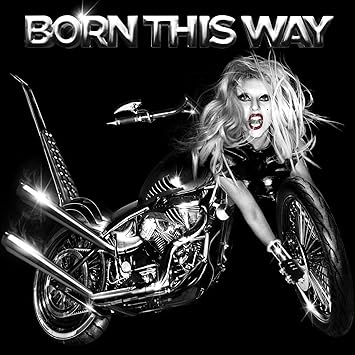
 

Image result for lady gaga born this way
Lady Gaga


Why is music so impactful?

NPR describes that music makes us feel seen and that it sets “terms for how we’ll move into the future.”  With the advancement of technology, you can not only share these videos, but you can also become a part of the conversation. Comments on YouTube, Facebook, Twitter, and other Social Media provide instant feedback. This feedback allows one to advertise their opinion. Free speech promotes this and technology allows it, and assists in the globalization of opinions.

Become a part of this conversation and comment your feedback below!

Sources:

Laval théologique et philosophique

Psychology Today

The FCC

The Internet Encyclopedia of Philosophy

National Geographic

The Washington Post

Vivian

NPR Turning the Tables

Technology: The History of Music Globalization

By: Ellen Chamblee

In many ways, music is making the world a smaller place. When traveling to Italy last semester, I found many of my favorite Justin Bieber songs including “Despacito” played in Italian restaurants and popular hangouts. It has American and Hispanic influences and is played all around this globe.  This is an example of the globalization of music. Globalization– is the spread of products, technology, information, and jobs across national borders and cultures. But how did this come to be? Well first, we must grasp an understanding of music history and how music is globalized. Let’s dive in!


world-music_blog
Kent State University


Music History in a nutshell

Music has been around as long as humans. It began as an oral tradition for communication. Music was important to assist in memory of text and was influential in religious ceremonies. (Music of Western Civilization). While this might still be true today, the music industry has rapidly changed because of technological influences. With the development of Gutenberg’s printing press, music could be notated as well as widely distributed. Printing allowed for accessibility to sheet music; sheet music allowed for music to increase in complexity. There was no longer a reliance on memory to recreate musical works, and there was no longer a tedious hand-written process (forget a feather and ink!) to create and copy music scores. Music distribution rapidly increased. (Music of Western Civilization).

Advancement in music due to technology surely did not stop there. The invention of the radio and audio recording was a giant leap for the music industry. Tape recording allowed composers to have “total control over the musical outcome.” (Music in Western Civilization). The radio distributed music to a mass audience. People all over were engaging in the same, popular music.

Again, technology advanced and the music industry adapted with records, cassette tapes, and later CDs. Accessibility to music continued to grow, and grow rapidly. According to Vivian’s “The Media of Mass Communication,” mass media is constantly evolving and much of this is because of the expansion and complexity of the internet. (Vivian). iTunes came about in the early 2000s, as did other means to download music. Music could be stored and kept on mobile devices, allowing us to carry music with us. Streaming is now the hot new thing. Streaming allows one to access media without downloading it on to your device. We can stream thousands of songs with the click of a button. Much of streaming is free to consumers, fueled by ad sales.

phone_blog
The Verge


Music Globalization Today

The Globalization of the internet and increased access to music websites means that people all over the globe are gaining access to music. Websites including YouTube and Sound Cloud allow users to search for music at their pleasure. With an increase of “pull” (media readily available to consumers) audiences have a surplus of options to explore. (Vivian). YouTube and SoundCloud also allow users to post their own music content. This accessibility has evolved the music industry. Production, consumption, and distribution of music are significantly cheaper than ever before, (Uncommon Culture).

Justin_blog
Route Note

There is no longer a gatekeeper to music. Record companies are not the sole way into musical fame and no longer own and manage most copyrights of music. (Research gate). YouTube sensation, Justin Bieber gained fame through YouTube. As his music went viral, he became recognized and is now world renown. (Research Gate). Countries all over the world are now streaming his music and watching his YouTube videos. Music is spread across borders, causing “geographical boundaries to dissolve” (Uncommon Culture).


Sources:

Vivian

Music in Western Civilization

Uncommon Culture

Research Gate 

Sound Cloud

YouTube

Investopedia


Header Image Source